
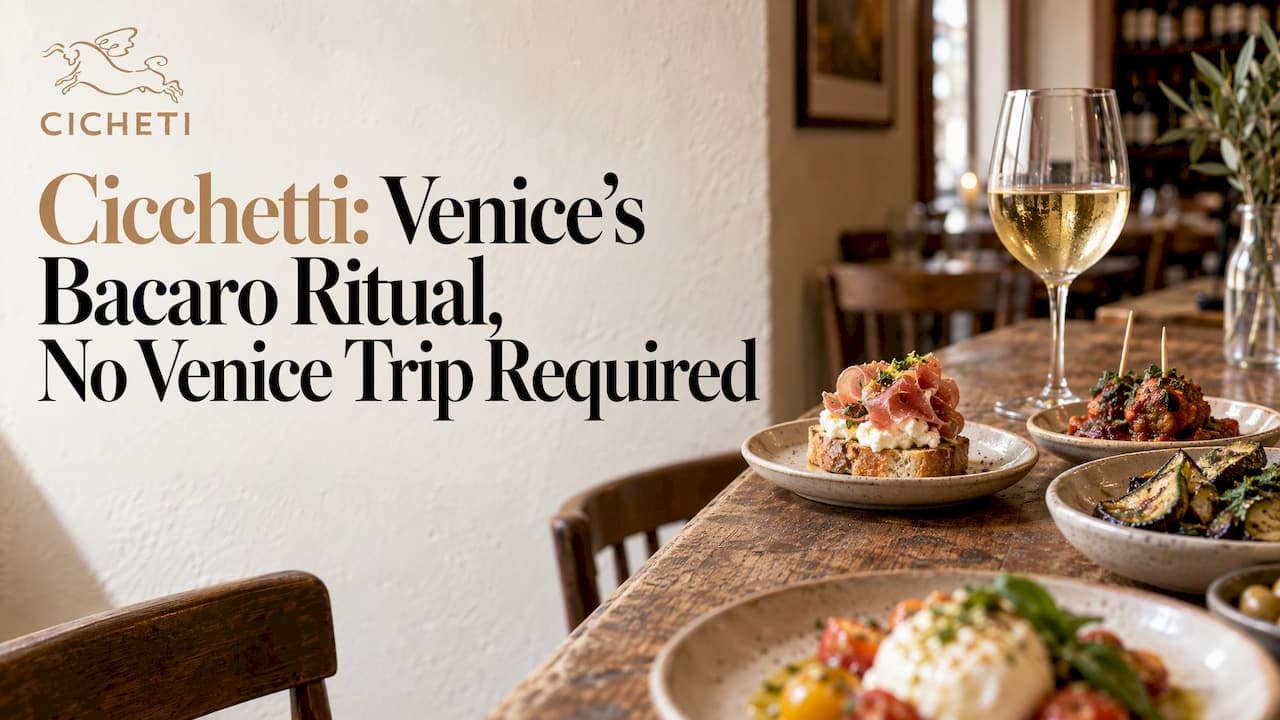
Cicchetti are Venice's small, counter-served snacks, sold by the piece and eaten standing with a small glass of wine in a bacaro. You say it "Chee-KET-tee", and the singular is cicchetto (Venetians write cicheto and cicheti). They resemble tapas, yet they belong to a distinct Venetian ritual of quick bites, a little wine and good conversation.
TL;DR:
- Visit a neighborhood wine bar from midmorning through early afternoon or during the late afternoon pre dinner drinks period, when counters are freshly stocked.
- Choose from the counter display, order a small wine or spritz, then point and state the number of pieces; payment often comes after eating.
- Try one fish, meat, and vegetable bite to sample the range, including whipped salt cod, marinated sardines, fried meatballs, or topped polenta.
- Two or three pieces make a light snack, while a circuit through several bars can easily replace dinner over the course of an evening.
- Stand at the counter to eat, since seating is usually reserved for full meals and may bring a cover charge at some bars.
Table of Contents
- Where does the word cicchetti come from, and why does it matter?
- What foods count as cicchetti?
- What are bacari, ombre and the giro d'ombre?
- When and where should you try cicchetti?
- How do you order, pay and eat cicchetti with confidence?
- How can you make cicchetti at home?
- Why the bacaro ritual is worth copying
- Want to taste Venetian-style small plates closer to home?
- FAQ
- Sources
Where does the word cicchetti come from, and why does it matter?
The word is usually traced to a Latin root meaning a small morsel, and Venetians spell it their own way: cicheto in the singular, cicheti in the plural. The dialect spelling is the one you will often see chalked up in the city's bars, and it is the one that Venice's tourist board uses for the ritual of moving between bars while sampling small bites.
The story behind the snacks is a practical one. Bacari began as simple wine shops, and over time they grew into the small taverns we now associate with cicchetti. Venice's city pass guide describes bacaro-hopping as a customary Venetian practice, not a tourist invention. Workers and traders needed quick sustenance between jobs, and a bite of something savoury alongside a glass of wine did the job perfectly.
That is why cicchetti matter far beyond the food. They work as social glue in Venetian hospitality: a place where locals catch up, trade news and keep the day moving. CNN's reporting captures local voices who describe cicchetti as central to daily life and a bacaro stop as an essential local experience.
A few things set the tradition apart from an ordinary meal:
- Speed: you stand, you sip, you nibble, you move on.
- Scale: each piece is small enough to eat in one or two bites, often by hand.
- Company: the bar counter is shared space, where strangers and regulars end up side by side.
- Rhythm: the point is the circuit of several bars, not a single sit-down course.
- Affordability: the snacks are modest in price, which keeps the habit open to everyone.
Think of it as a trip down Venice's memory lane: a custom shaped by the city's working life, its canals and its love of company.
What foods count as cicchetti?
Walk up to a counter and you will see trays of small bites laid out like a edible mosaic. By definition, cicchetti are served on bread or polenta with seafood, meat or vegetables, though the range stretches well beyond that. Traditionally they are displayed in bacari windows and on counters as bite-size crostini, sandwiches, fried seafood and marinated vegetables.
The classics you are most likely to meet:
- Baccalà mantecato: salt cod whipped into a creamy spread, usually piled on toasted bread or a square of polenta. Venetian cooking guides count it among the star starters of cicchetti culture, alongside schie (tiny lagoon shrimp) with polenta.
- Sarde in saòr: sardines fried, then marinated in a sweet-and-sour mix of onions, raisins and vinegar. This is a classic Venetian dish you will find among cicchetti.
- Polpette: golden fried meatballs, sometimes fish, sometimes meat, eaten warm in a single bite.
- Crostini and tramezzini: small toasts and soft triangular sandwiches with toppings such as prosciutto, cheese, artichoke or tuna.
- Polenta squares: grilled or soft, topped with cod, mushrooms or cheese.
- Boiled eggs with anchovy: simple, salty and made for a glass of white wine.
You will also notice how much seafood and how many island vegetables appear. That is no accident. Venice's food reflects its trading past, and salt cod, raisins and exotic spices show the city's East–West culinary crossroads.
That sizing is the clever part. Prices stay low because each piece is small, and the selection changes with the day and the season, which is why travel writers recommend seeking out neighbourhood bacari away from the busiest sights. Cicchetti range from simple to elaborate, and they pair naturally with local wines as part of Venice's wider aperitivo culture.
If you are new to the counter, start with one fish piece, one meat piece and one vegetable piece. That gives you a fair taste of how the city eats.
What are bacari, ombre and the giro d'ombre?
A bacaro is a small, often tucked-away wine bar where cicchetti are served at the counter. These are the back-alley taverns locals still treat as their living rooms, and bacari specialise in small bites and a wide selection of regional wines, often eaten by hand or with a toothpick.

An ombra is the small glass of wine you order alongside. The word means "shade", and the tale behind it is charming: wine sellers once moved their stands around St Mark's bell tower to keep their barrels cool in its shadow, so a glass of wine became "an ombra". Eating a bite with it is the ritual of ombra e cicchetto.
The giro d'ombre is the crawl itself, a circuit through several bars, one glass and a piece or two at each. The simplest formula is a small bite plus a small sip. Here is what a typical giro involves:
- A short stop at each bar: order a drink and one or two bites, then move on.
- Standing at the counter: the pace is quick and social, not lingering.
- Variety: each bar has its own specialities, so you taste something different every time.
- A loose route: most people simply follow the alleys and let the smell of frying guide them.
The idea is to savour the circuit slowly across the evening, not to eat everything at once, which is why guides note that cicchetti are often misunderstood as simply tapas. The magic is in the movement.
When and where should you try cicchetti?
Timing matters, because fresh stock makes all the difference. The giro is best done mid-morning to early afternoon, and again in the late-afternoon aperitivo window when the counters have been freshly filled. In practice that means a late-morning stop or a visit during that window.
To spot an authentic bacaro, look for a few signs:
- A counter piled with food you can see and point at.
- Locals standing with their glasses, chatting.
- A short, chalked or minimal menu, not laminated photos.
- A side-street setting, away from the major sights, since travel writers suggest steering towards neighbourhood bacari rather than tourist hot spots.
Outside Venice, expect variations. Look for menus that mention Venetian or bacaro-style small plates and for a counter or shared display, but accept that the ingredients and the pace will differ from a canal-side original.
How do you order, pay and eat cicchetti with confidence?
The good news: you do not need Italian, only a little nerve. Cicchetti are rarely listed on menus, so you order visually from the counter, pointing and asking by count ("tre, per favore"). Follow these steps:
- Look first. Scan the counter and see what is freshest.
- Order your drink. A small glass of wine or a spritz comes first.
- Point and count. Say how many of each piece you want.
- Pay at the till or bar, often when you finish rather than upfront.
- Eat standing, by hand or with a toothpick, and leave the plate for the staff.
A few small courtesies help. Do not ask for items to be reheated, because the true experience favours freshly displayed pieces and disrupts the kitchen's flow. Avoid asking for big changes to what is already made.
On quantities, two or three pieces suit a light snack, while a full giro of several bars can easily replace dinner. Seating changes the rules: sitting is usually reserved for full-menu meals, and a coperto (cover charge) may apply. A genuine giro is fast-paced and mostly on your feet.
Pro Tip: Start with the items that are warm and fried, since they are best straight from the kitchen, then move on to the cold toppings.
How can you make cicchetti at home?
Recreating the style takes modest effort, and supermarket ingredients are enough. The usual pantry essentials are seafood such as sardines or cod, bread, olive oil, vinegar, herbs, cured meats and polenta. Here are three simple formulas, loosely guided by home-cook resources such as this Venetian local's recipes.
Recipe 1: baccalà mantecato on polenta
- Soak salt cod in cold water, changing the water, then poach gently until flaking.
- Beat the flaked cod with olive oil until creamy, adding a little garlic and parsley.
- Spoon onto warm polenta squares or toasted bread.
Recipe 2: sarde in saòr on crostini
- Fry floured sardines until golden.
- Layer with softened onions, raisins and a splash of vinegar, and leave to marinate.
- Serve on crisp crostini.
Recipe 3: crostini with cheese and pickles, or quick polpette
- Toast small slices of bread and top with a good local cheese and a sliver of pickle.
- Alternatively, shape seasoned mince into small balls, fry until golden and serve warm.
A few tips for the table:
- Serve everything on a board so guests can graze.
- Offer toothpicks for the fiddly pieces.
- Pour small glasses of dry white wine or a spritz, mirroring the ombra ritual, as Aperol's guide to pairing suggests.
Why the bacaro ritual is worth copying
What I love about cicchetti is how little they ask of you. There is no table to book, no course to plan and no rush to finish. You stand, someone hands you a glass, and the conversation does the rest. The food is wonderful, but the real centre is the company, and the snack is merely the excuse.
That spirit has quietly shaped how many of us now eat, from shared plates to bar-counter dining. You can practise it anywhere: a board of small bites at home, a few friends, a bottle open. Keep it quick, keep it light, and let the evening drift from one small pleasure to the next.
— Cicheti
Want to taste Venetian-style small plates closer to home?
If the idea has you hungry, we serve Venetian-inspired small plates alongside a curated list of Italian wines at our trattoria. Book our Cicheti Family-Style Menu at $85 per person, or ask for the Sommelier Selection of the day to taste cicchetti-style flavours with a glass in hand. See what we are serving on our menus, then reserve a table.

FAQ
Where is the best place to get cicchetti in Venice?
Look for a small neighbourhood bacaro away from the major sights, with a counter display and local customers. Travel writers suggest seeking out less-touristy bacari, because their selection changes daily and seasonally.
What is traditional cicchetti?
Traditional cicchetti are small snacks served over a bacaro counter, usually on bread or polenta with seafood, meat or vegetables. Classic examples include sarde in saòr and baccalà mantecato, eaten standing with a small glass of wine.
How is cicchetti different from tapas?
Both are small bites with drinks, but cicchetti belong to a specific Venetian ritual of moving between bars. They are meant to be savoured across the giro d'ombre instead of eaten all at once.
When is the best time to eat cicchetti?
Aim for mid-morning to early afternoon, or the late-afternoon aperitivo window. Both are when fresh stock is at its peak.